Here’s what’s upcoming and what you may have missed at CMEP and in the news.
Middle East News
1. Trump threatens Iran’s trade partners, as military strikes make way for economic pressure
The Guardian
"Donald Trump has announced a new campaign to isolate Iran’s economy, threatening 'tremendous economic consequences' on any country that helps or does business with Tehran, a move that could set up a fresh confrontation with China if implemented. 'Today, I am announcing the most crushing economic operation ever taken against any country!' Trump wrote on Truth Social. 'Any country that allows its financial institutions, businesses, airports, or government entities to provide any type of lifeline to Iran will itself face tremendous economic consequences.'"
2. Trump posts map labeling Strait of Hormuz as US territory
The Hill
"President Trump posted an image of a map labeling the Strait of Hormuz as a U.S. territory early on Tuesday in an apparent effort to double down on his calls to annex the waterway. The map, which Trump posted on his Truth Social account, labels the waterway as a 'new U.S. territory.' The Strait of Hormuz, through which 20 percent of the world’s oil flows, is located in the territorial waters of Iran and Oman. Trump first floated the idea of annexing the Strait of Hormuz on Friday at a campaign-style event, telling attendees he would be declaring the waterway a U.S. territory 'pretty soon.' When asked about the comment in the Oval Office on Monday, Trump said he liked the idea and claimed the U.S. already controls the waterway."
3. Israeli military launches criminal probes into killings of 5-year-old and paramedics
NPR
"Israel's military on Wednesday announced its first criminal investigations into troop conduct in Gaza, focusing on the killings of 5-year-old Hind Rajab and her family and of 15 Palestinian paramedics. The military said it would not probe three other attacks that killed aid workers from World Central Kitchen and Doctors Without Borders. It said it had completed reviews of 150 incidents of troop conduct in Gaza and made decisions on the five cases."
4. A Palestinian American's journey to his West Bank home under settler siege
Reuters
"He watched from thousands of miles away on a security camera feed as militant Israeli settlers encircled his West Bank house, fearing he could lose his home forever amid increasing Israeli seizures of Palestinian property in the occupied territory. Loui Ridi, a Palestinian American living in Toledo, Ohio, owns one of three homes that have been under Israeli settler siege for over a week in the occupied West Bank village of Qusra, a case that has drawn U.S. condemnation. After watching anxiously from the U.S. for seven sleepless nights, the 46-year-old, who grew up in Qusra before emigrating, decided to board a flight from Detroit for the Middle East and try to visit his home on Monday."
5. State-backed Israeli settler violence forces West Bank displacement: HRW
Al Jazeera
"Dozens of Palestinian communities in the occupied West Bank are at risk of erasure due to escalating attacks by Israeli settlers, according to a new report by Human Rights Watch. Increased settler attacks, along with the rapid expansion of Israeli settlements illegal under international law, are driving a wave of forced displacement of Palestinians, the US-based rights group said in a report released on Thursday. The report accuses Israeli authorities of arming, funding and granting impunity to settlers to carry out the attacks. Israeli settler violence has been growing since the current government took office in December 2022. But attacks spiked in the first two months of the US and Israel’s war on Iran, with killings including those of children, assaults, sexual violence, physical and mental abuse, arbitrary detention, arson, property demolition and theft among the reported abuses, the report adds."
6. Trump 'serious' about direct Hezbollah talks to end Lebanon war
The New Arab
"US President Donald Trump is prepared to hold direct talks with Hezbollah if they could help end the conflict in Lebanon, according to the head of a US-Lebanese advocacy group visiting Beirut. Edward Gabriel, president of the American Task Force on Lebanon (ATFL) and a former US ambassador, told local television station Al Jadeed that members of his delegation had discussed the issue with US officials at the embassy in Beirut. He said they were told Trump was 'serious' about the possibility of direct dialogue with Hezbollah. However, Gabriel said Washington did not currently believe the group had shown sufficient willingness to enter such talks."
7. Israel struck Syria to avoid a direct clash with Turkey, experts say
The Jerusalem Post
"Israel’s strikes on the Abu al-Duhur military airfield in the Idlib province in northwestern Syria on Tuesday were necessary to avoid a direct clash with Turkish forces on its borders, two experts on the region told The Jerusalem Post on Wednesday. Dr. Hay Eytan Cohen Yanarocak, an expert on Turkey at the Moshe Dayan Center for Middle Eastern and African Studies at Tel Aviv University, told the Post that Jerusalem was 'not interested' in clashing with Turkey, and was therefore 'doing everything possible to keep Turkey away from its borders.' Ankara rejected allegations made by Jerusalem that the deployment of Turkish forces violated the 'status quo' and posed a threat to Israel’s security."
8. Pope calls to end violence against West Bank Palestinians as settler attacks surge
The Times of Israel
"Pope Leo XIV called on Sunday for an end to violence against Palestinians in the West Bank, amid a surge of attacks by extremist settlers and a siege in the territory’s village of Qusra. The residents of two homes on the outskirts of Qusra had been under siege since August 9, when Israeli settlers surrounded the buildings in an apparent effort to compel their residents – including young children – to flee. Israeli soldiers have since been deployed to the road outside the homes, blocking the occupants from leaving while apparently attempting to prevent settlers from returning. 'I renew my appeal for an end to the repeated violence against the Palestinian civilian population in the West Bank,' the pope said, without mentioning specific confrontations or attacks."
As the IDF moves further into Gaza, it is forcing the entirety of Gaza’s remaining population into just 30% of the strip’s area, where the medical situation grows increasingly untenable. It is in this environment of shortage and restriction that the East Jerusalem Hospital Network (EJHN) operates and makes its vital impact. They are the only hope for Gazans, and even West Bankers, in need of sustained, complex treatment for their survival. To secure funding and ensure EJHN can continue to serve the vulnerable of the West Bank and Gaza, urge your Member of Congress to pressure the State Department to allocate the EJHN funds.
Action Alert: Tell Congress to Respond to Settler Violence and Protect Palestinian Lives
Since October 7th, 2023, illegal Israeli settlements have grown and spread across the West Bank in complete contravention of international and even Israeli law. These settlements undermine Palestinian access to critical natural resources and land and undermine hope for a just and lasting solution. Furthermore, the Israeli settlers at the forefront of these illegal land grabs assault Palestinians with almost no punishment from the Israeli justice system — and many times are aided by the Israeli Defense Forces (IDF). To stop this violence, Churches for Middle East Peace (CMEP) calls for immediate U.S pressure on Israel to stop approving settlements and prosecute those that commit crimes against Palestinians.
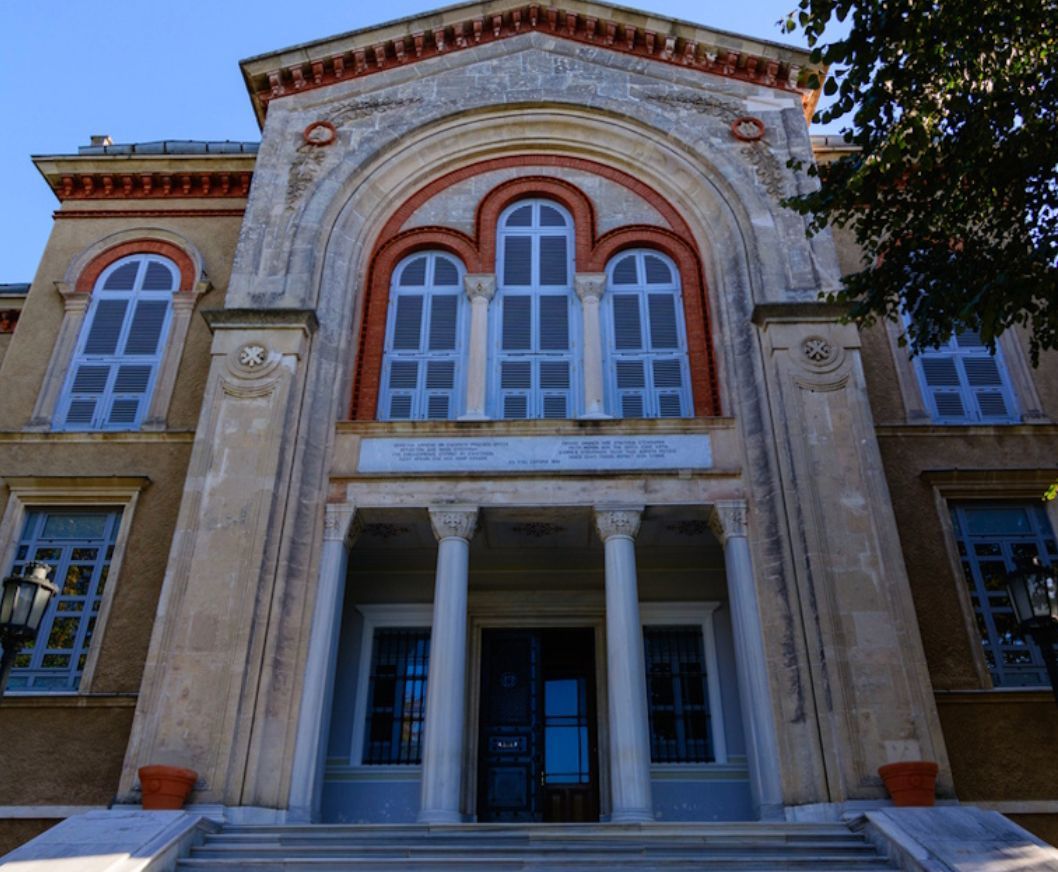
Aug 17, 2026: Written by a CMEP Board Member: Halki’s Reopening: US Religious Freedom Policy Can Remedy Turkey’s Potemkin Performance
In “Halki’s Reopening: US Religious Freedom Policy Can Remedy Turkey’s Potemkin Performance,” CMEP Board Member Dr. Elizabeth H. Prodromou and Fr. Milan Sturgis examine the reopening of the Halki Seminary and what it reveals about Turkey’s treatment of religious minorities. They argue that U.S. religious freedom policy can play a critical role in moving beyond symbolic gestures toward meaningful protections for the Ecumenical Patriarchate and other religious communities, emphasizing the importance of sustained American engagement in defending religious freedom in Turkey.
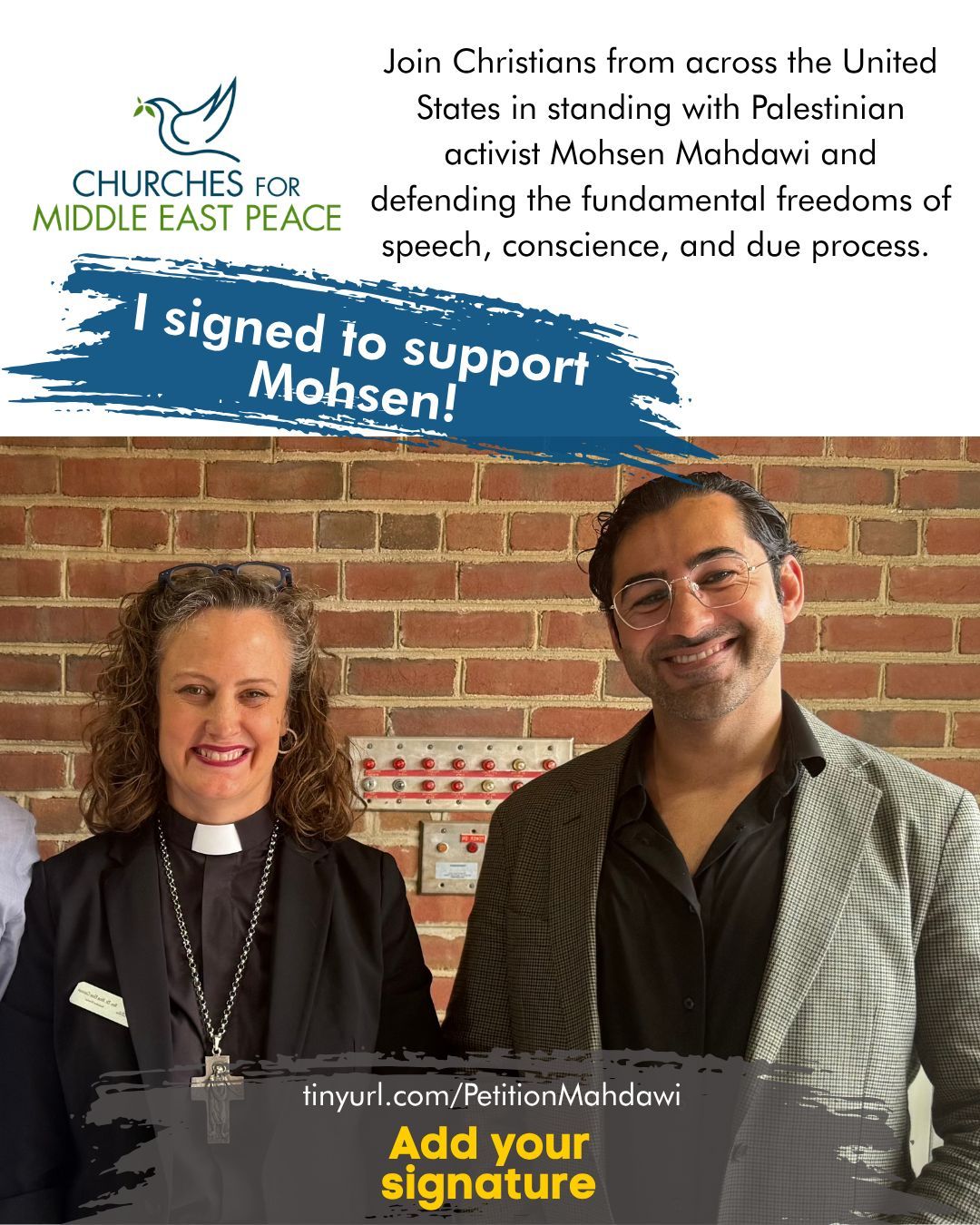
August 5, 2026: Sign-On! Christian Petition Supporting Palestinian Human Rights Advocate Mohsen Mahdawi
Join Christians and Christian organizations from across the United States in standing with Mohsen Mahdawi and defending the fundamental freedoms of speech, conscience, and due process. This letter affirms that no one should face detention or deportation because of their peaceful advocacy or political beliefs. By adding your name or organization, you are standing for justice, human dignity, and the biblical call to protect the vulnerable. We are 100 signatures away from our next benchmark goal! Sign today and add your voice to this growing Christian witness.
Blogging for Peace: Follow Rev. Dr. Mae Elise Cannon, Executive Director of CMEP, on Substack
Stay up to date with reflections from CMEP Executive Director Rev. Dr. Mae Elise Cannon. Her Substack features updates on developments in Gaza and across the Middle East, commentary on U.S. policy, CMEP webinars and events, meeting transcripts, and reflections on faith, justice, and peace.
August 23, 2026: Destiny Magnett at Westminster Presbyterian (Wilmington, DE)
Time: 9:30 am - 12:00 pm ET
On August 23, join CMEP’s Destiny Magnett for a guest sermon and post-worship conversation at Westminster Presbyterian Church in Wilmington, DE. First, in her sermon titled Fan Into Flame: Courageous Witness in Trying Times Destiny will explore the calls of 2 Timothy 1:3-14 both from the time in which Paul wrote this letter, and how we might hear its call to courage in the name of the gospel today. Then, after worship, join Destiny for: Faith in Action: Calls to Courage for Israel, Palestine, and the Broader Middle East. This conversation centers the question: How can Christians in the U.S. seek to faithfully bear witness and respond to the crises we see unfolding across the Holy Land today? Attendees will hear updates on the current realities on the ground across the Middle East, and how CMEP and its coalition partners have sought to respond here in the U.S.
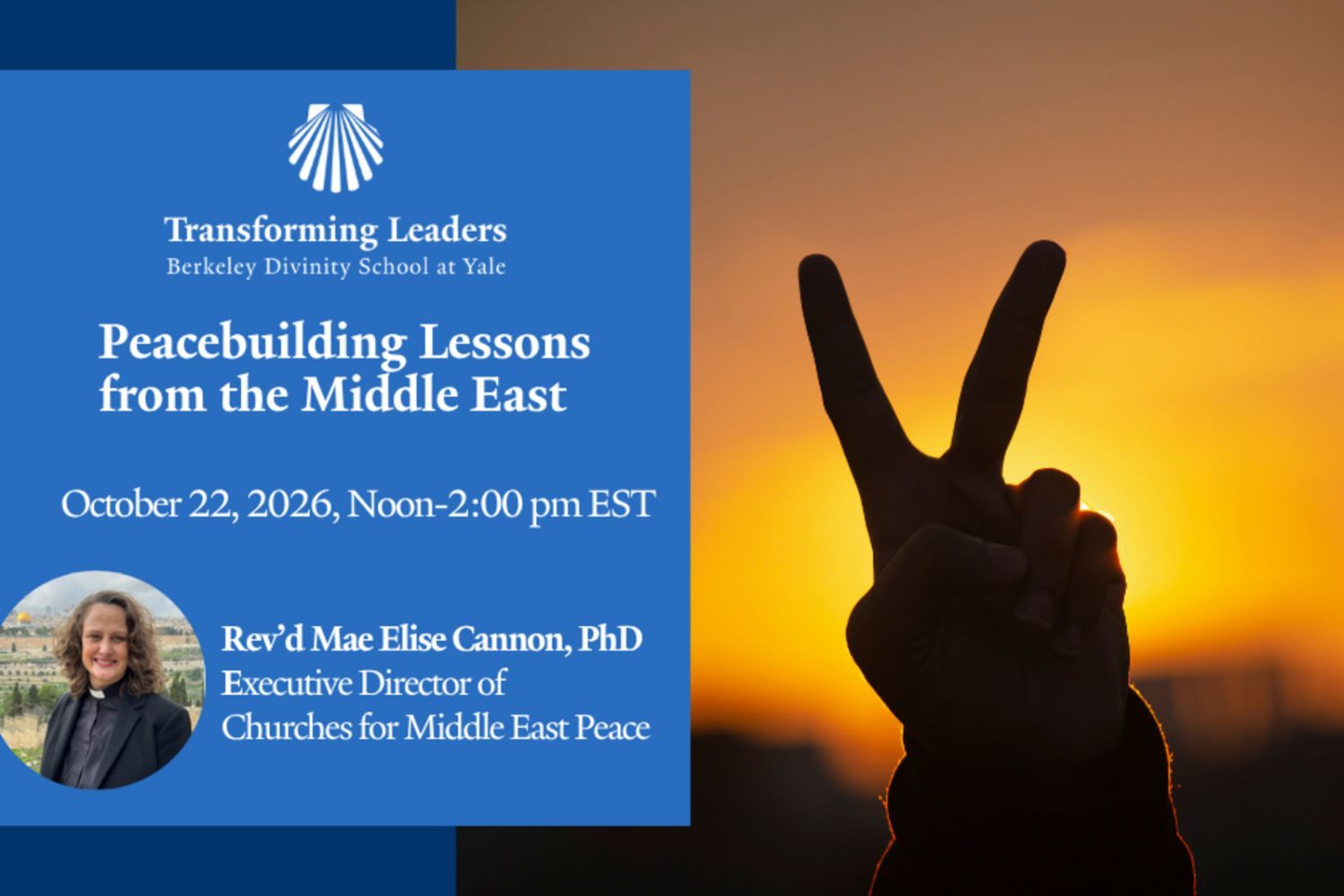
October 22, 2026: Peacebuilding Lessons from the Middle East
Time: 12:00 pm - 2:00 pm ET
This moment in history is marked by profound brokenness and trauma affecting individuals, communities, and nations alike. In a world increasingly divided by conflicts, particularly in the Middle East, Christians from the region offer invaluable insights on resiliently living out one’s faith amidst adversity. Join Churches for Middle East Peace executive director, Rev. Dr. Mae Elise Cannon, for this course exploring the vibrant, living church in the Holy Land, with a focus on Israel and the occupied Palestinian territories as they strive to deepen their relationship with God through their commitment to peace and justice within their communities. This workshop takes an interdisciplinary approach, interweaving history, practical theology, and contemporary ministry practices in peacebuilding. Participants will gain access to essential tools for spiritual formation and advocacy applicable in a variety of ministry settings. A central theme will be the transformative journey of learning to 'love one’s enemy,' even in the face of conflict and strife, ultimately equipping learners to apply these lessons in their own lives and ministries.
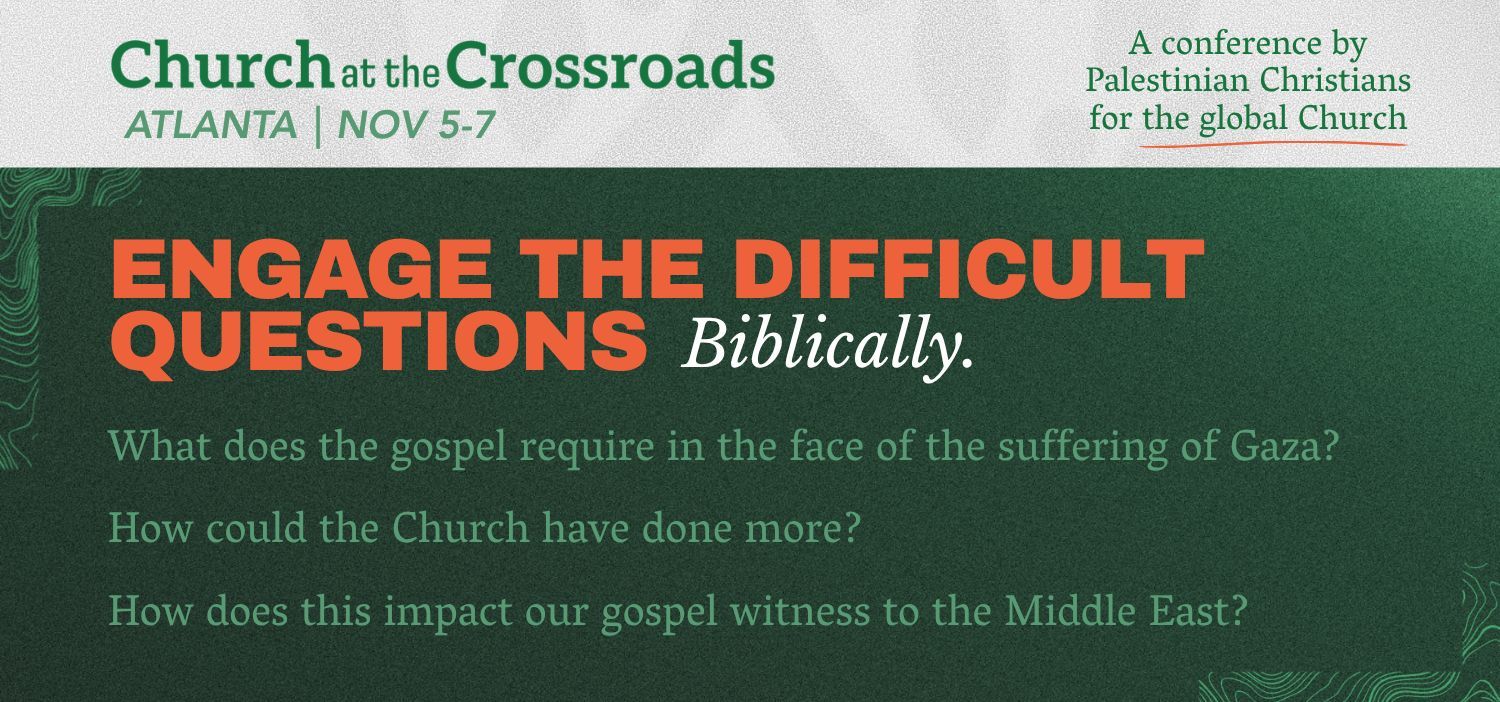
This November, Churches for Middle East Peace (CMEP) is excited to once again partner with the Bethlehem Institute for Peace and Justice (BIPJ) as they bring the Church at the Crossroads conference to Atlanta November 5-7, 2026. Rooted in Scripture and kingdom-focussed theology, this conference invites participants to wrestle honestly with biblical questions, hear directly from the indigenous Church in the Holy Land, and discover faithful discipleship in a violent world.
Christian Advocacy Summit for Just Peace in Palestine
Join Christians from across the United States in Washington, D.C. April 19-21, 2027 for the Christian Advocacy Summit as we gather to uphold the cause of the oppressed (Psalm 146:7–9) and advocate for a just peace in Palestine and Israel. Over three days, participants will engage in inspiring plenary sessions, practical breakout workshops, worship, fellowship, and advocacy training focused on advancing U.S. foreign policy that promotes peace, justice, human rights, and equal dignity for all people in the Holy Land. Together, we will strengthen our shared Christian witness and prepare to engage policymakers with a unified call for a just and lasting peace. Discounted early-bird registration is available until October 15, 2026 or until we've sold our first 50 tickets–– so act fast!