Here’s what’s upcoming and what you may have missed at CMEP and in the news.
Middle East News
1. US-Iran conflict enters new phase as Saudi Arabia helps hit proxies and diplomacy stalls again
AP News
"The stop-start fighting between the United States and Iran appears to have entered a new phase as Saudi Arabia has publicly joined military escalations against Tehran-backed proxies. At the same time, an already untenable diplomatic effort to end the war has faltered once again as mistrust deepens between the longtime adversaries. Despite several days of relative calm, both sides carried out military strikes in the last 24 hours that once again risk a return to all-out war — and further expansion in the region — while little is clear about what strategy, if any, American or Iranian officials have for a path forward."
2. Hamas says it has agreed to disarm after Trump announces Board of Peace plan
BBC News
"US President Donald Trump says the Board of Peace has reached an agreement for the "complete disarmament" of Hamas and other armed groups in Gaza in what he says was 'a critical step towards Gaza finally being governed by a new Palestinian government.' It was unclear whether Hamas and Israel were part of the agreement. Neither party has commented on the announcement. Trump said Israel would withdraw from Gaza 'as disarmament is completed.' The second phase of a US-brokered Gaza ceasefire plan includes the disarmament of Hamas and the reconstruction of Gaza."
3. Mapping Israeli settler violence in the West Bank
Al Jazeera
"Israeli settlers set fire to two mosques in separate attacks in the occupied West Bank in the early hours of Sunday, causing significant damage and daubing them with racist graffiti. The mosques are Al-Rahma in Qusra, south of Nablus, and one in the village of Kour, south of Tulkarem. Israeli settlers also spray-painted the words 'Jewish revenge' as the mosques were set on fire.This is the latest incident in years of violent occupation and ethnic cleansing of the Palestinian people by Israeli settlers and forces. Palestinian officials say at least 45 mosques were vandalised or burned by illegal settlers in the West Bank in 2025 alone."
4. Trump’s Lebanon fantasy is running smack into reality
Responsible Statecraft
"On June 26, two official delegations — one from Israel and one from Lebanon — signed a framework agreement with great fanfare in Washington. Secretary of State Marco Rubio, openly enthusiastic, framed the event as paving the way toward 'lasting peace and security' between Beirut and Tel Aviv. A month later, President Donald Trump received Lebanese President Joseph Aoun at the White House. Once again, Rubio welcomed the visit and reiterated the goal of disarming Hezbollah and achieving a complete and definitive peace between Lebanon and its southern neighbor."
5. Fringe Israeli settler group is sneaking into Syria to try to claim land for a Jewish outpost
AP News
"The Israeli military was about to launch a nighttime strike on a group of men in southern Syria when the soldiers noticed the long curls dangling from the temples of their targets. The troops held their fire. These were not Syrian militants attempting to breach Israel’s border, but religious Jews who had slipped into Syria and were on their way back. The episode, first reported last week by Israel’s public broadcaster and confirmed to The Associated Press by the Israeli military, has helped raise the profile of a fringe group of Israeli settlers that has staged numerous incursions into Syria, where they hope to establish Jewish settlements. Israel’s military has occupied the area in southern Syria for more than a year, but forays by civilian settler groups into the region have only recently became a regular occurrence."
6. President Ahmed al-Sharaa: Syria seeking security deal with Israel
Al Jazeera
"Syrian President Ahmed al-Sharaa has revealed that Damascus is actively working to reach a security agreement with Israel with the participation of several countries. Speaking in an exclusive interview on Al Jazeera’s Al Muqabala programme, the full interview, to be broadcast at 19:00 GMT, al-Sharaa said he hopes the deal with Israel could serve as a gateway to a comprehensive peace. He also assured that such an agreement would not compromise Syria’s right to the occupied Golan Heights, which Israel has illegally occupied since 1973. He said Syria is avoiding any clashes with Israel, and that a security arrangement could pave the way for a broader and more comprehensive resolution to the crisis. It comes after repeated Israeli incursions and strikes in southern Syria, since al-Sharaa came to power in December 2024 following the collapse of Bashar al-Assad’s government."
7. Christians arbitrarily detained in Syria denied Bible access, forced to observe Ramadan, CSI report
The Jerusalem Post
"Christians and other minority groups have been arbitrarily detained by the Syrian Transitional Government for reasons that 'sometimes appear to be motivated in part by the detainees’ ethnic or religious identity,' according to a newly published report by Christian Solidarity International that was presented to the UN, which alleged that detainees are often forced to adopt Islamic practices and denied access to items connected to their own faith. Acknowledging that Damascus has faced an 'enormous challenge' ensuring there is accountability for the crimes committed under the regime of Bashar al-Assad, CSI reported that the 'settlement' system proposed to deal with the crisis had been used as a template."
8. Christian persecution concerns rise in Egypt as State Department presses religious freedom
Fox News
"A series of violent attacks on Egyptian Christians, including the incarceration of a man who converted from Islam to Christianity, prompted the U.S. State Department to urge that religious freedom be respected in the Muslim-majority country of Egypt. The situation of the Christian minority in Egypt has implications for religious freedom in the northern African nation that receives $1.3 billion in annual funding from the U.S."
9. The Carter Center Calls for Action as Violence Escalates in the West Bank
Carter Center
"The Carter Center calls upon the international community to demand that Israel prevent settler violence and stop the official and de facto annexation of the occupied West Bank, which is resulting in record numbers of Palestinian deaths, injuries, and displacement. This year alone, the United Nations Office for the Coordination of Humanitarian Affairs has documented an average of six Israeli settler attacks per day in the West Bank, resulting in Palestinian casualties, property damage, or both. Settler attacks are now the leading cause of Palestinian injuries in the West Bank, and more than 3,200 Palestinians have been displaced by settler attacks and home demolitions this year—double the daily rate of the previous three years. Settlers are also increasingly targeting international visitors, journalists, and solidarity activists, reflecting a dangerous widening of violence."
As the IDF moves further into Gaza, it is forcing the entirety of Gaza’s remaining population into just 30% of the strip’s area, where the medical situation grows increasingly untenable. It is in this environment of shortage and restriction that the East Jerusalem Hospital Network (EJHN) operates and makes its vital impact. They are the only hope for Gazans, and even West Bankers, in need of sustained, complex treatment for their survival. To secure funding and ensure EJHN can continue to serve the vulnerable of the West Bank and Gaza, urge your Member of Congress to pressure the State Department to allocate the EJHN funds.
Action Alert: Tell Congress to Respond to Settler Violence and Protect Palestinian Lives
Since October 7th, 2023, illegal Israeli settlements have grown and spread across the West Bank in complete contravention of international and even Israeli law. These settlements undermine Palestinian access to critical natural resources and land and undermine hope for a just and lasting solution. Furthermore, the Israeli settlers at the forefront of these illegal land grabs assault Palestinians with almost no punishment from the Israeli justice system — and many times are aided by the Israeli Defense Forces (IDF). To stop this violence, Churches for Middle East Peace (CMEP) calls for immediate U.S pressure on Israel to stop approving settlements and prosecute those that commit crimes against Palestinians.
June 26, 2026: Written by CMEP: The Belhar Confession: Road Map to Unity, Reconciliation, and Justice
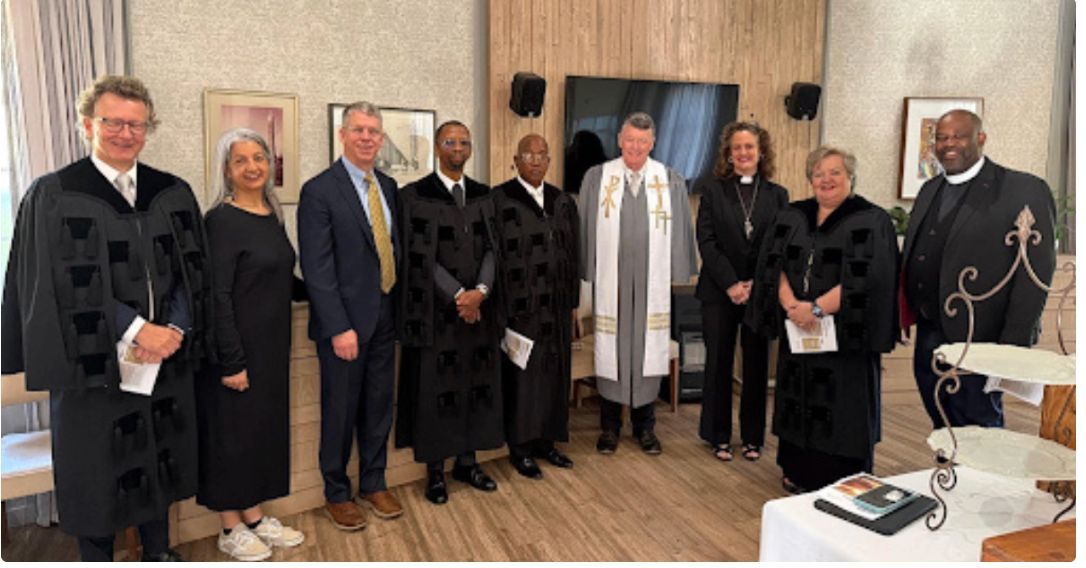
In this article published in Christian Reformed Church, Rev. Dr. Mae Elise Cannon, Executive Director of CMEP, reflects on the enduring significance of the Belhar Confession and what it can teach the church today. Drawing on both the confession's origins in the struggle against apartheid in South Africa and her recent visit to the country, Rev. Dr. Cannon considers how its call to unity, reconciliation, and justice speaks to ongoing injustice in South Africa, Israel/Palestine, the United States, and beyond. As a result, Rev. Dr. Cannon encourages Christians to move beyond silence and bear faithful witness by standing with the oppressed, confronting injustice, and working for a just and lasting peace.
Blogging for Peace: Follow Rev. Dr. Mae Elise Cannon, Executive Director of CMEP, on Substack
Stay up to date with reflections from CMEP Executive Director Rev. Dr. Mae Elise Cannon. Her Substack features updates on developments in Gaza and across the Middle East, commentary on U.S. policy, CMEP webinars and events, meeting transcripts, and reflections on faith, justice, and peace.
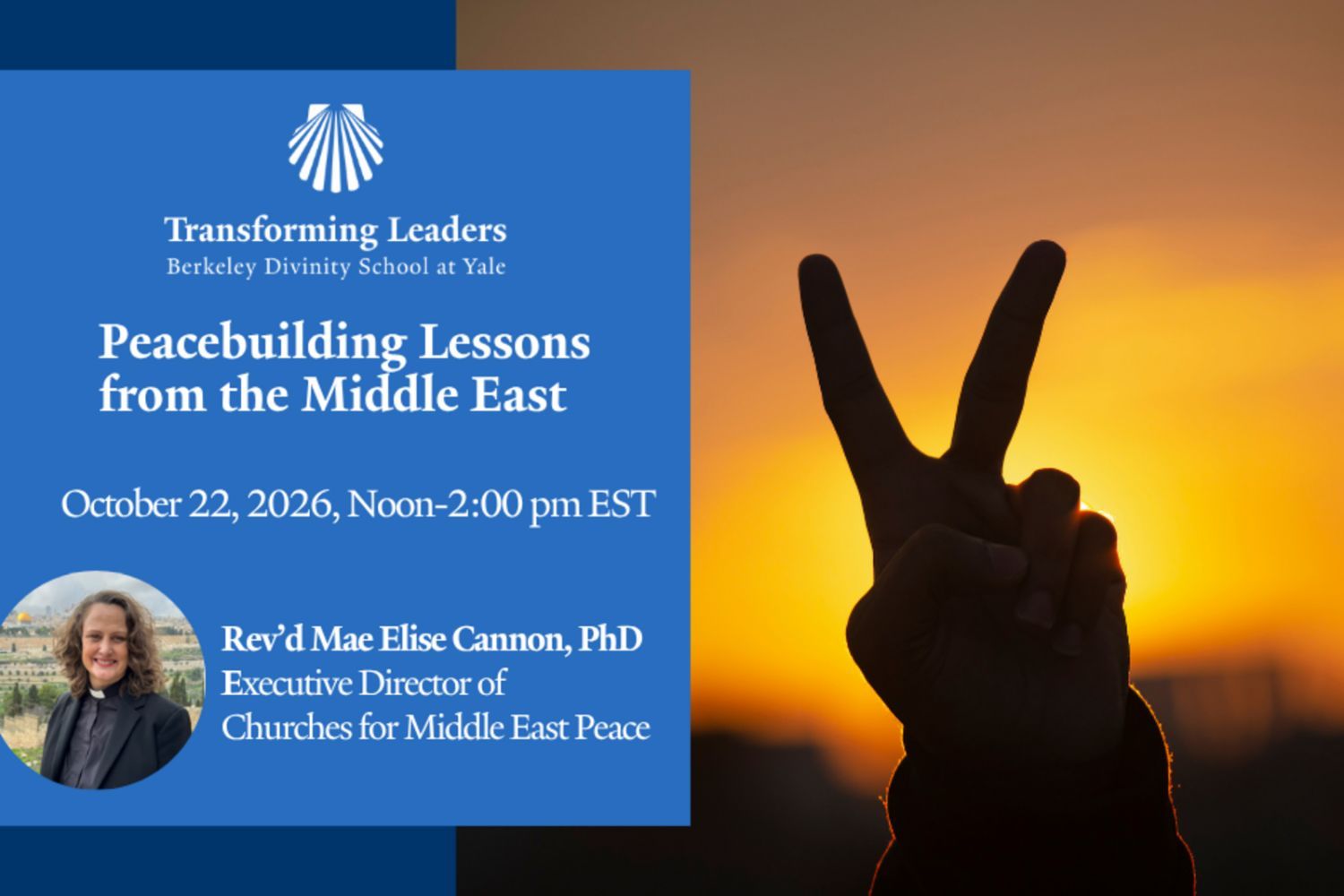
October 22, 2026: Peacebuilding Lessons from the Middle East
Time: 12:00 pm - 2:00 pm ET
This moment in history is marked by profound brokenness and trauma affecting individuals, communities, and nations alike. In a world increasingly divided by conflicts, particularly in the Middle East, Christians from the region offer invaluable insights on resiliently living out one’s faith amidst adversity. Join Churches for Middle East Peace executive director, Rev. Dr. Mae Elise Cannon, for this course exploring the vibrant, living church in the Holy Land, with a focus on Israel and the occupied Palestinian territories as they strive to deepen their relationship with God through their commitment to peace and justice within their communities. This workshop takes an interdisciplinary approach, interweaving history, practical theology, and contemporary ministry practices in peacebuilding. Participants will gain access to essential tools for spiritual formation and advocacy applicable in a variety of ministry settings. A central theme will be the transformative journey of learning to 'love one’s enemy,' even in the face of conflict and strife, ultimately equipping learners to apply these lessons in their own lives and ministries.
Christian Advocacy Summit for Just Peace in Palestine
Join Christians from across the United States in Washington, D.C. April 19-21, 2027 for the Christian Advocacy Summit as we gather to uphold the cause of the oppressed (Psalm 146:7–9) and advocate for a just peace in Palestine and Israel. Over three days, participants will engage in inspiring plenary sessions, practical breakout workshops, worship, fellowship, and advocacy training focused on advancing U.S. foreign policy that promotes peace, justice, human rights, and equal dignity for all people in the Holy Land. Together, we will strengthen our shared Christian witness and prepare to engage policymakers with a unified call for a just and lasting peace. Discounted early-bird registration is available until October 15, 2026 or until we've sold our first 50 tickets–– so act fast!
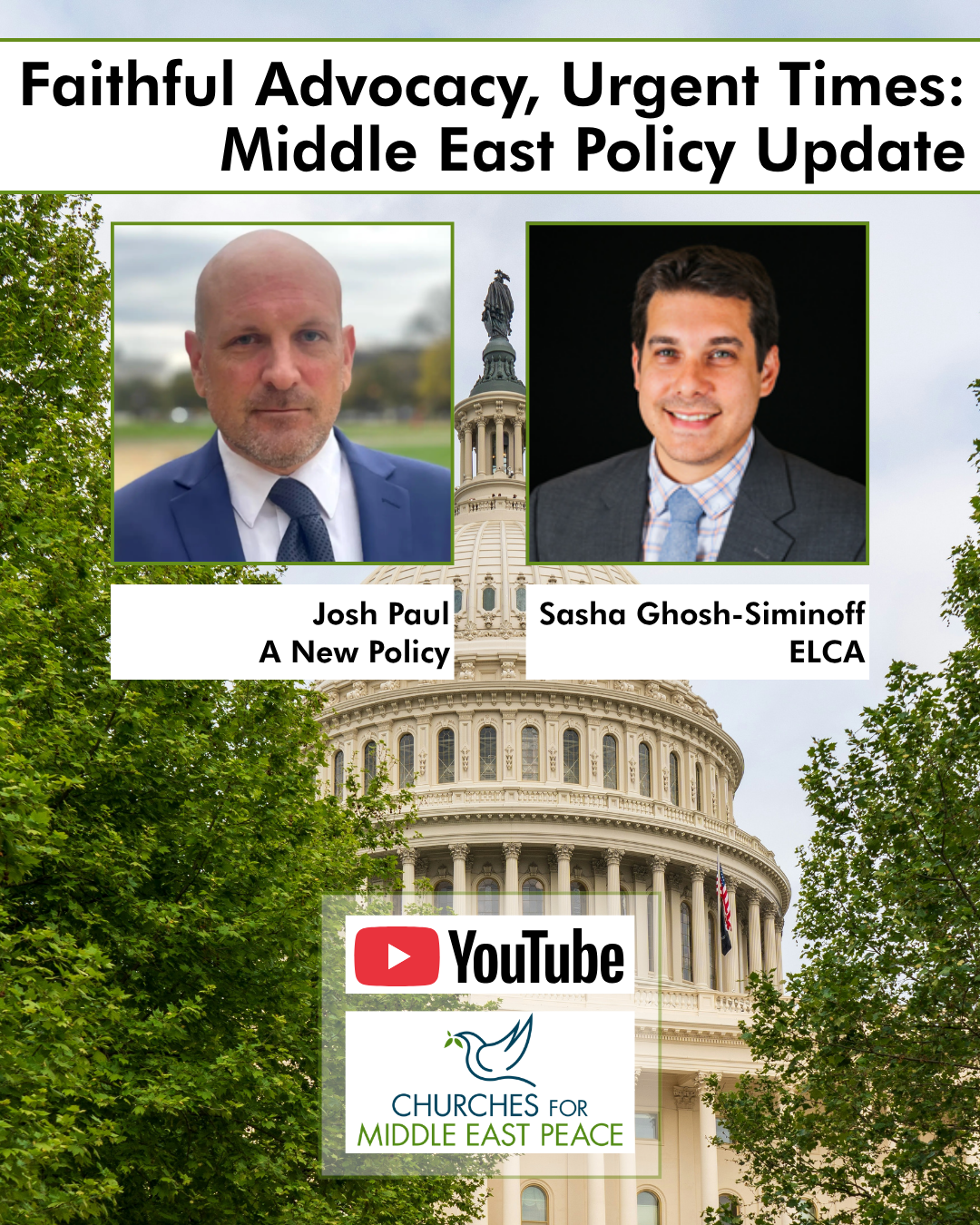
On July 15th, Churches for Middle East Peace (CMEP) hosted a timely conversation with DC-based experts Sasha Ghosh-Siminoff (ELCA) & Josh Paul (A New Policy) which explored the current landscape on Capitol Hill related to legislation impacting Palestine, Israel, and the broader region. In particular, panelists addressed issues like the East Jerusalem Hospital Network, the Massie Amendment (which was voted on hours after the webinar), and how constituents can use August recess as an opportunity for advocacy in their home-districts. The recording can be found here.