Here’s what’s upcoming and what you may have missed at CMEP and in the news.
Middle East News
1. US expands attacks on Iran, which calls Strait of Hormuz a ‘red line’ as it retaliates
AP News
"The United States expanded its airstrike campaign against Iran early Friday by increasingly hitting bridges, part of U.S. President Donald Trump’s threats to start striking infrastructure to pressure Tehran to ease its chokehold on the Strait of Hormuz. Iran launched new missile attacks against U.S.-allied nations in the Middle East, including Qatar, a key mediator in the war. The interim ceasefire agreed to last month has collapsed, and the region has endured days of back-and-forth attacks by the U.S. and Iran as they battle for control of the strait. Iranian officials say U.S. strikes have killed more than 35 people and wounded over 300 others, with new casualties reported in Friday’s strikes."
2. UN official says Hamas obstructing Gaza aid: ‘Dangerous pattern of intimidation, violence’
The Times of Israel
"A senior UN official on Monday accused Hamas of interfering with humanitarian deliveries in Gaza and intimidating aid workers, warning that the terror group’s actions were making relief operations increasingly dangerous. Palestinian Islamist terror movement Hamas continues to control parts of Gaza, even after Israeli forces expanded their presence across the majority of the territory. In a statement, UN Deputy Special Coordinator for the Middle East Peace Process, Ramiz Alakbarov, said he 'strongly' condemned the obstruction of humanitarian operations by Gaza’s de facto authorities, referring to Hamas."
3. Trump’s Board of Peace drops full Gaza recovery plan in favour of tiny pilot scheme
The Guardian
"The Gaza recovery plan being pursued by Donald Trump’s Board of Peace (BoP) has shrunk dramatically from an ambitious blueprint for the reconstruction of the whole territory to a small pilot project in the south of the strip. Even the envisaged pilot scheme – involving a temporary camp for a tiny fraction of Gaza’s 2 million displaced people, with a Palestinian administration, police and a small international security force – is not expected to take shape before the end of the year."
4. Government says $431 million allocated last month for 34 new West Bank settlements
The Times of Israel
"The government announced Tuesday that NIS 1.3 billion ($431 million) was allocated by the security cabinet last month to fund the establishment of dozens of new West Bank settlements approved by Israel over the last three and a half years. The cabinet decision was formulated by the Prime Minister’s Office, and will be implemented by the Settlements Ministry and the Housing and Construction Ministry. Finance Minister Bezalel Smotrich and Settlements Minister Orit Strock announced the details in a joint press conference, stating that the funds would be used to establish 'pioneer neighborhoods' at the sites of newly approved settlements, which will include prefabricated homes, roads and infrastructure."
5. Lebanon and Israel move toward implementing withdrawal agreement, US officials say
AP News
"After two days of U.S.-mediated talks in Rome, Lebanon and Israel took steps toward implementing “pilot zones” in southern Lebanon where Israeli forces would withdraw and turn over control to the Lebanese army, the U.S. State Department said Wednesday. The latest Israel-Hezbollah war began when the Lebanese militant group fired rockets into Israel days after Israel and the U.S. launched their war on Iran on Feb. 28. Israel invaded Lebanon and has since occupied a large swathe of the country’s south. Hezbollah has been vehemently opposed to the direct Lebanon-Israel talks."
6. In seismic shift, more than 100 House Democrats vote to end Israel aid
Politico
"Nearly half of House Democrats voted to cut off aid to Israel Wednesday, underscoring a seismic shift in political support for the longtime U.S. ally. The amendment to a State Department spending bill would have eliminated $3.3 billion in funding, and thanks to strong Republican support for the Jewish state, it failed 314-104. But the vote served as a moment of reckoning for House Democrats who have had to confront years of voter outrage about Israel’s handling of the war in Gaza."
7. UN experts demand Iran reverse seizure of Tehran church, warn of crackdown on Persian Christian life
The Jerusalem Post
"Iran’s confiscation of St. Peter’s Evangelical Church in Tehran - also known as Qavam Church - and the eviction of the 27 members of the Christian community who lived within its compound must be reversed, UN experts demanded on Wednesday. 'Twenty families, most of whom are low-income, long-standing residents of the compound, were reportedly given just two weeks to leave their homes. The church’s leaders were threatened with arrest if they failed to comply. The final resident left on 12 July (Sunday), prompting fears that the complex may be demolished,' the experts said. 'Forced evictions are incompatible with international human rights law and risk leaving members of recognized religious and ethnic minorities homeless.'"
8. What Pope Leo won’t say about Gaza is testing the Catholic Church
+972 Magazine
"The first pope from the United States was far removed from the July 4 celebrations marking the 250th anniversary of the colony’s independence from the United Kingdom. Instead, Pope Leo XIV was on the edge of Europe, opposite the northern coast of Africa, on the island of Lampedusa — the first port of call for thousands of migrants making the perilous journey north in search of a better life. After visiting the small cemetery where migrants who died in Mediterranean shipwrecks are buried, Leo stood beneath the Porta d’Europa, a monument to hospitality overlooking the sea. 'I am here,' he declared, 'following in the footsteps of Pope Francis, who chose to travel to Lampedusa on 8 July 2013 for his first trip as the Successor of Peter.'"
9. Synod votes to ‘hear’ document that speaks of ‘genocidal war on Gaza’
Church Times
"The General Synod, after hours of impassioned debate and procedural delays, has voted to 'hear' a document that describes Israel as a 'colonial enterprise' that inflicted a 'genocidal war on Gaza.' A diocesan-synod motion from Carlisle emphasising the Church’s support for the Palestinian people was amended and carried on Monday, despite appeals from the Chief Rabbi, Sir Ephraim Mirvis, and the Board of Deputies of British Jews, for the Church to reject the document."
July 15, 2026: P4P: "Life Stitched Back Together": The Church and Refugees in Jordan
In this P4P, Jack Leary reflects on the work of Father Mario Cornioli and the Habibi Association in Jordan, where Iraqi refugees displaced by war have found dignity, purpose, and hope through vocational training and meaningful employment. Highlighting initiatives that provide refugees with opportunities to rebuild their lives, Leary looks into how acts of compassion and faithful service can restore what conflict has torn apart. His reflection reminds us that Christians are called not only to pray for those forced to flee from their homes, but also to respond with practical love that helps create a future characterized by hope, dignity, and peace.
July 14, 2026: Churches for Middle East Peace Welcomes The Rev. Dr. Stephen Murray as Chief Development Officer
Churches for Middle East Peace (CMEP) is pleased to announce that The Rev. Dr. Stephen Murray has joined the organization as its new Chief Development Officer. Rev. Dr. Murray brings decades of leadership in philanthropy, theological education, ministry, and ecumenical engagement. He joins CMEP from Georgetown University, where he served as Senior Director of Development for Family Philanthropy and taught in the Department of Theology and Religious Studies. Throughout his career, he has held leadership positions at institutions including Ecumenical Theological Seminary, the Congregational Library and Archives, Barrytown College, Harvard University, and Yale University, while also serving congregations across several Christian traditions.
Blogging for Peace: Follow Rev. Dr. Mae Elise Cannon, Executive Director of CMEP, on Substack
Stay up to date with reflections from CMEP Executive Director Rev. Dr. Mae Elise Cannon. Her Substack features updates on developments in Gaza and across the Middle East, commentary on U.S. policy, CMEP webinars and events, meeting transcripts, and reflections on faith, justice, and peace.
Please join us on Zoom for a weekly briefing on current news regarding the Hamas and Israel War. Hear from CMEP Staff and other experts and ask questions at the end. Every Thursday from 10:30-11:15 am Eastern.
MATCH DAY WEEKEND! 2500$ Worth of Donations will be Matched 1for1 this Friday -Sunday! Give now to double your impact!
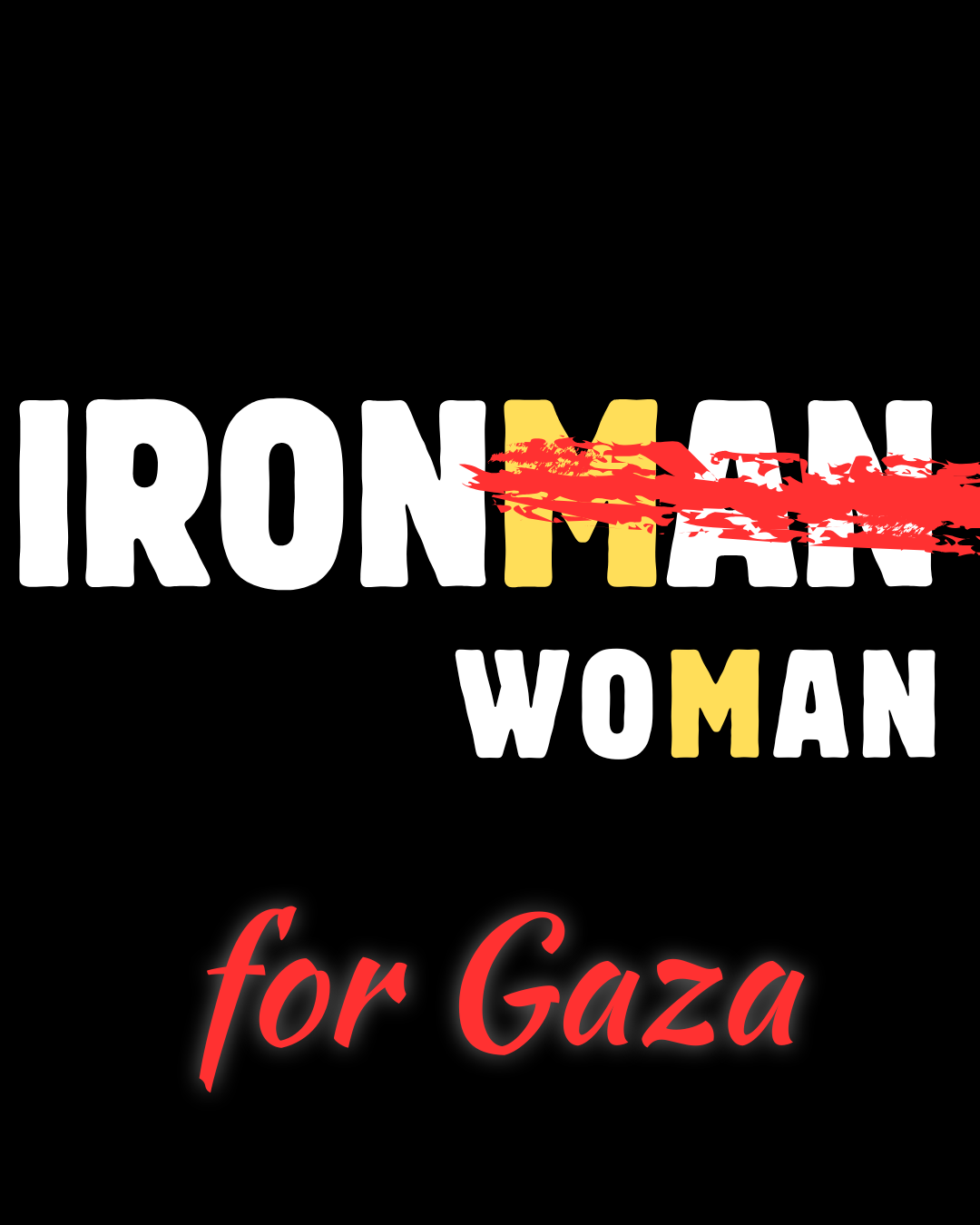
We are not giving up on pursuing peace! And CMEP's executive director persists in pursuit of completing a 140.6 IronMan triathlon on behalf of Gaza. "Persistence is an essential quality for peace. I have learned that lesson again and again in life, and never more so than in my pursuit of a deeply personal and transformative journey — one that challenges me both physically and emotionally. Through my training for, and eventual completion of, an Ironman Triathlon, I aim to raise $140,600 to support a cause that is close to my heart: bringing freedom, justice, and peace to the Middle East."- Rev. Dr. Mae Elise Cannon, Executive Director of CMEP
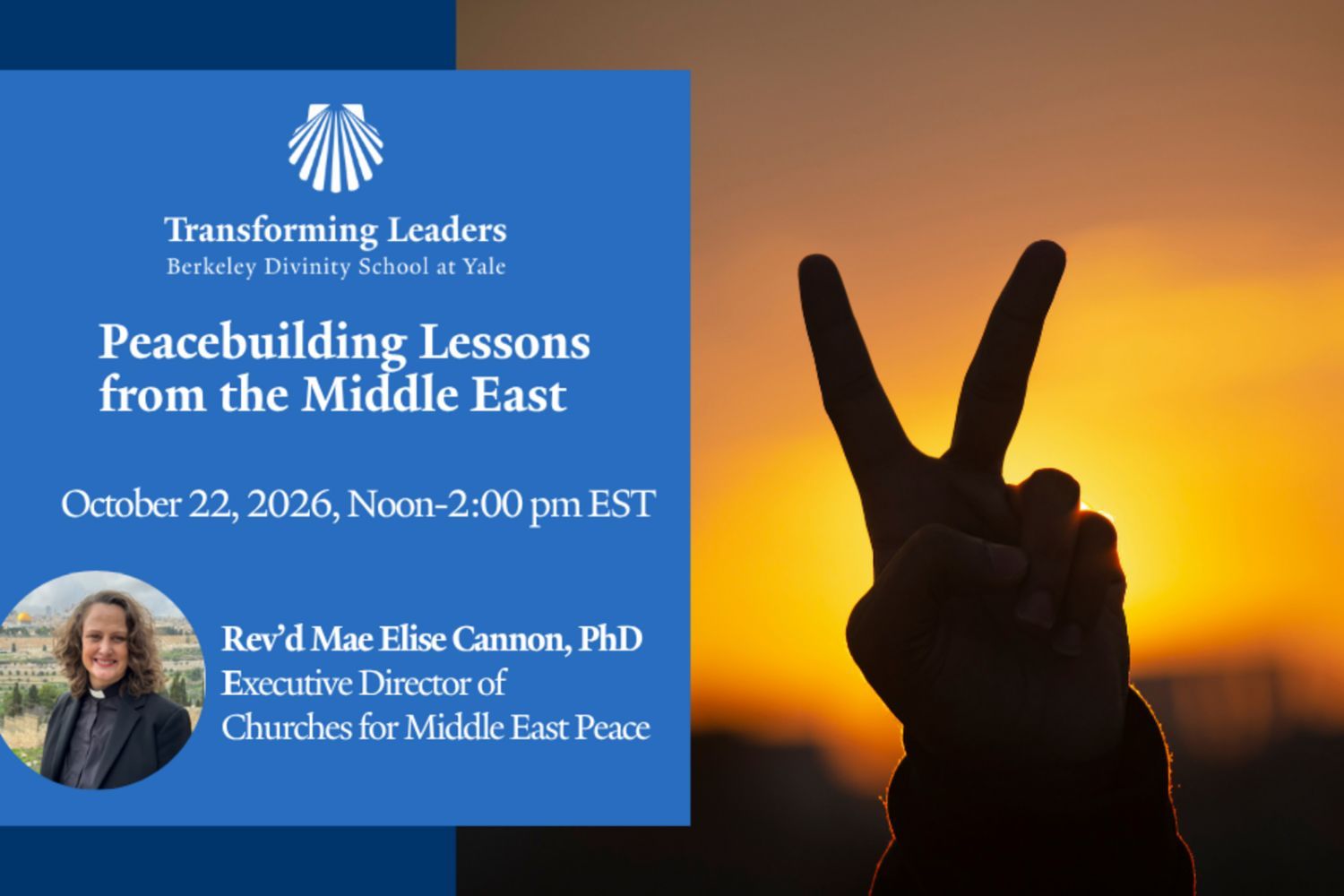
October 22, 2026: Peacebuilding Lessons from the Middle East
Time: 12:00 pm - 2:00 pm ET
This moment in history is marked by profound brokenness and trauma affecting individuals, communities, and nations alike. In a world increasingly divided by conflicts, particularly in the Middle East, Christians from the region offer invaluable insights on resiliently living out one’s faith amidst adversity. Join Churches for Middle East Peace executive director, Rev. Dr. Mae Elise Cannon, for this course exploring the vibrant, living church in the Holy Land, with a focus on Israel and the occupied Palestinian territories as they strive to deepen their relationship with God through their commitment to peace and justice within their communities. This workshop takes an interdisciplinary approach, interweaving history, practical theology, and contemporary ministry practices in peacebuilding. Participants will gain access to essential tools for spiritual formation and advocacy applicable in a variety of ministry settings. A central theme will be the transformative journey of learning to 'love one’s enemy,' even in the face of conflict and strife, ultimately equipping learners to apply these lessons in their own lives and ministries.